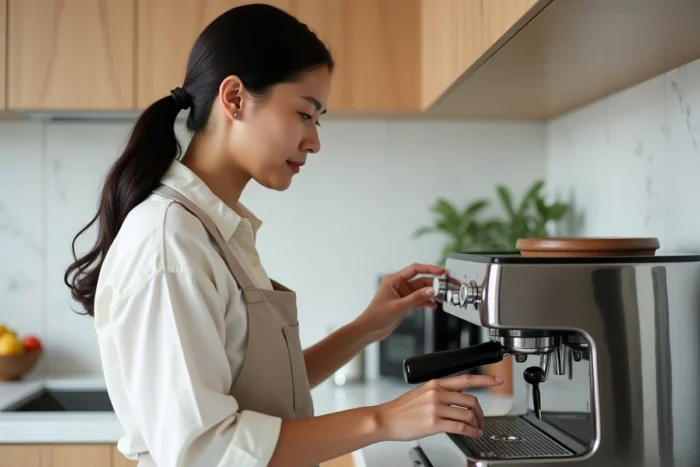
A coffee machine transforms hot water and ground or whole coffee beans into a beverage, based on an extraction principle that varies radically from one type of device to another. Pressure, percolation, infusion: each method produces a different cup profile. Choosing the right coffee machine for your home requires understanding these mechanisms before comparing models.
Water hardness and coffee machines: a criterion that guides overlook
The composition of tap water directly influences the longevity of your machine and the taste of the coffee produced. Very hard water accelerates the scaling of the hydraulic circuit, reduces extraction pressure, and alters the aromas.
In hard water areas, prioritize models equipped with an integrated filter cartridge with a replacement reminder. These filters retain some of the limescale before it reaches the boiler. The annual cost of filters and descaling products should be included in the overall budget, as it can represent a significant portion of the usage cost.
Easy access to the internal circuit for descaling is another point of vigilance. Some automatic grinders include a guided descaling program, while on a manual espresso machine, the operation is entirely the user’s responsibility. To compare models suitable for different water profiles, a useful resource is: https://www.espresshome.com/, which lists coffee machines with their detailed technical specifications.
Pressure extraction or gravity: what it changes in the cup
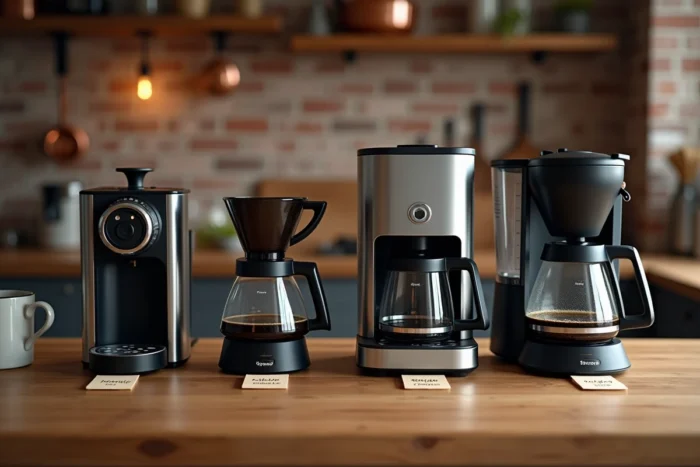
The type of extraction determines the texture, intensity, and flavor profile of the coffee. Two main families coexist.
Pressure extraction
Espresso machines (manual, automatic bean, capsule) force water through ground coffee under high pressure. The result: a short, dense coffee topped with a layer of crema. This method extracts more oils and aromatic compounds in a short time.
Bean-to-cup machines with integrated grinders grind the beans on demand, preserving the freshness of the aromas. Capsule machines simplify handling but limit coffee choice to ranges compatible with the proprietary system.
Gravity extraction or infusion
Filter coffee makers and gentle methods (French press, pour-over) work by slow percolation or immersion. Water passes through the ground coffee by gravity or remains in prolonged contact with the grind. The resulting coffee is lighter, longer, with more subtle notes.
The choice between pressure and gravity depends on the type of drinks you consume: a fan of strong espresso or cappuccino needs a pressure machine, while a drinker of large black coffee at breakfast will be satisfied with a filter coffee maker.
Repairability and lifespan of a coffee machine
Most comparisons focus on purchase price and features. However, repairability remains a determining factor for the actual lifespan of the device.
- The availability of spare parts (seals, removable coffee group, pump) varies greatly from one brand to another. Some manufacturers guarantee access to parts for several years after the model is discontinued.
- A removable coffee group can be cleaned and replaced without tools, extending the machine’s lifespan and facilitating regular maintenance.
- The presence of authorized repair centers in the area reduces intervention times and avoids having to ship the device abroad.
Before purchasing, check if the manufacturer publishes exploded views or maintenance manuals. A device designed to be disassembled can be repaired, while a sealed device is thrown away.
Actual footprint and operational height in the kitchen
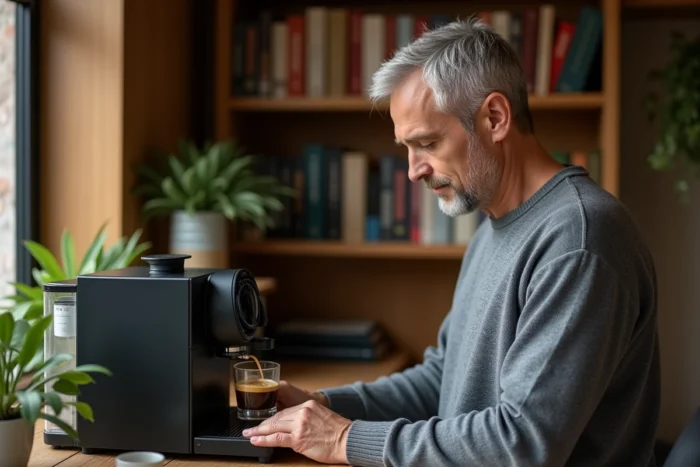
Product sheets indicate width and depth, but often omit the operational height: the space needed above the machine to open the bean reservoir, water tank, or maintenance cover.
A compact bean machine on paper may require an additional fifteen centimeters in height to be usable. Measure the space under your upper cabinets before ordering.
Depth poses a similar problem. The drip tray, grounds drawer, or water reservoir often remove from the front or side. If the machine is pressed against a wall or wedged between two appliances, these daily manipulations become cumbersome.
Cost per cup: capsules, pods, beans, or ground coffee
The purchase price of the machine represents only a fraction of the coffee budget over several years. The format of coffee used weighs much heavier in the long term.
- Proprietary capsules have the highest unit cost per cup. Compatible capsules reduce the bill but remain more expensive than beans.
- Whole bean coffee purchased in bags remains the most economical format per prepared cup, provided you have an integrated or separate grinder.
- Pre-packaged ground coffee offers a compromise between convenience and cost, suitable for filter coffee makers and espresso machines with portafilters.
- Soft pods (like Senseo) fall between beans and capsules in terms of cost per cup.
Beyond price, the format also influences the volume of waste produced. Aluminum capsules are recyclable through dedicated channels, but their effective collection rate remains limited. Whole bean coffee generates only grounds, which can be composted.
The choice of a coffee machine for home relies on a balance between the type of desired beverages, the physical constraints of the kitchen, the quality of local water, and the actual usage budget. Testing the tap water with a hardness strip before purchase allows you to anticipate maintenance costs and guide the choice towards a suitable model.