Between the 1970s and 2026, everyday life in France has changed in almost every respect: housing, work, communication and energy use. Measuring these changes means looking beyond a simple story of technological progress. Every convenience gained has shifted a cost elsewhere, whether in time, energy or social connection.
Conveniences gained and costs shifted: a comparison
Comparing two eras means looking at what has become easier alongside what has become more complicated. The table below summarizes the main areas of everyday life where the shift is most pronounced.
| Area of everyday life | 1970s | 2026 | Cost shifted |
|---|---|---|---|
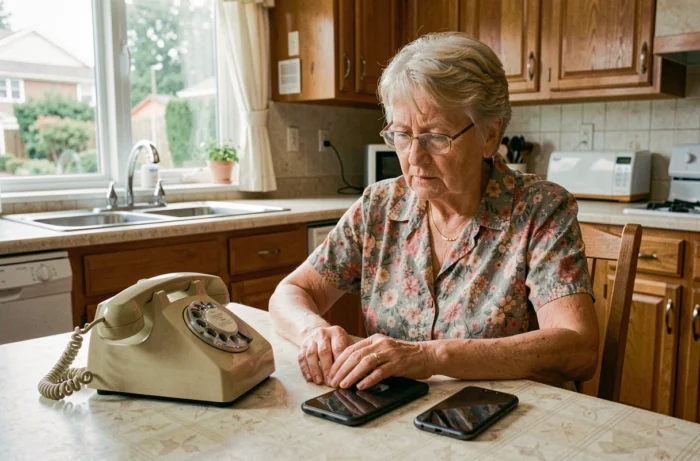
| Communication | Landline phones, postal mail | Smartphones everywhere, instant messaging | More screen time, constant interruptions |
| Work | Almost entirely in person, fixed hours | Remote work is possible, but access varies widely by occupation | Professional isolation, blurred boundaries between work and private life |
| Household equipment | A few household appliances | A wide range of digital devices, some of which go unused | Device accumulation, reuse and recycling challenges |
| Energy | Steadily rising consumption | Recent decline documented by SDES following the energy crisis | Energy conservation driven more by prices than by choice |
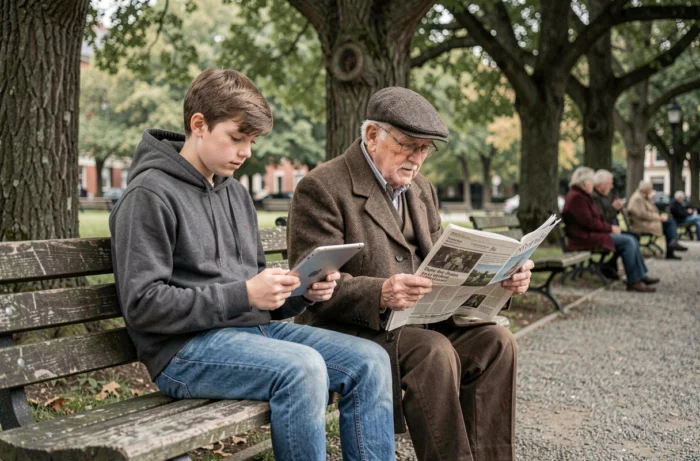
| Access to information | Newspapers, radio, three TV channels | Internet, generative AI, constant streams of content | Information overload, difficulty sorting through it |
An article exploring the changes between 1970 and 2026 on Magmoiselle looks at several of these shifts from a complementary cultural perspective.
The table reveals a recurring pattern: every gain in comfort has brought a new constraint. The convenience of smartphones has created screen dependence. The flexibility of remote work has led to isolation. The abundance of digital devices raises questions about their life cycle.
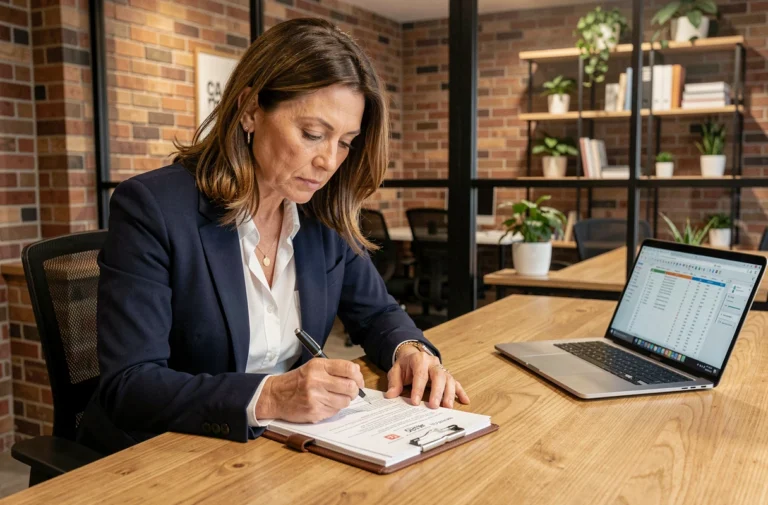
Remote work and everyday life: flexibility or fragmented time?
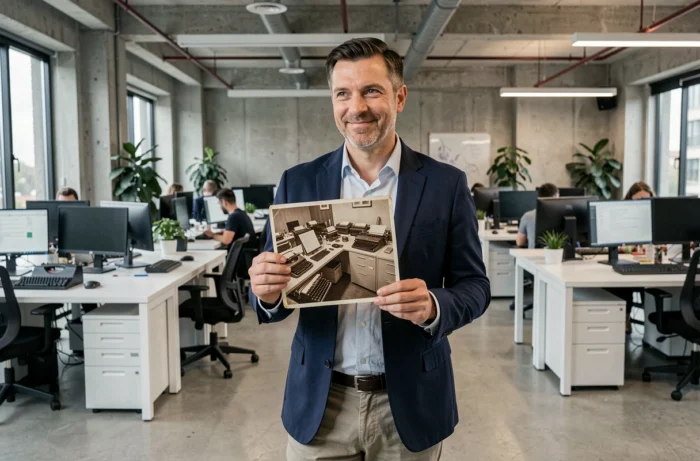
In the 1970s, the working day followed a rigid structure. People left in the morning and came home in the evening. The commute between home and the office shaped the rhythm of daily life.
By 2026, remote work has become firmly established since the pandemic, but access remains highly uneven across occupations. White-collar workers have far more opportunities to work remotely than people in manual or service jobs. Remote work does not necessarily reduce working hours; instead, it tends to spread them across the day.
This redistribution has a documented downside: more time spent alone and fewer face-to-face interactions with colleagues. The time saved on commuting does not always make up for the loss of workplace social connections, especially for people who live alone.
What the office provided without us realizing it
Coffee breaks, shared lunches and casual conversations in the hallway all contributed to workplace well-being in ways that video calls cannot replicate. Professional isolation has become a workplace health issue—one that did not exist in the same form in the 1970s.
Digital devices: the quiet accumulation since the 1970s
A household in the 1970s might have had a television, a record player and perhaps a transistor radio. In 2026, the smartphone has become the central screen of everyday life without replacing all the others. TVs, tablets, laptops and smart speakers now coexist.
Some of the digital devices in households go unused. Devices bought a few years ago sit in drawers, neither reused nor recycled. This accumulation challenges the linear story of progress: owning more connected devices does not mean living better.
- Smartphones bring together communication, information, entertainment and payments, but they create near-constant interruptions that did not exist in the 1970s
- Artificial intelligence is becoming part of everyday life (voice assistants, recommendations, writing), adding another layer of technology to manage
- Reusing and recycling digital devices are now practical everyday concerns, whereas the issue simply did not arise fifty years ago
Household energy use: the recent turning point
From the 1970s to the early 2020s, electricity consumption among French households followed a generally upward trend. More appliances, more heated floor space, more electrical uses.
SDES documented a marked decline in households’ final electricity consumption in 2022 compared with 2021. This shift should be interpreted with caution: it was largely driven by the energy crisis and rising prices, rather than by a profound change in values.
Chosen energy conservation or energy conservation by necessity?
The distinction matters. In the 1970s, energy consumption rose as households acquired more appliances. In 2026, the recent decline primarily reflects economic pressure. Efforts to conserve energy remain fragile as long as they depend on the size of utility bills rather than a lasting change in habits.
This observation calls for a more nuanced view of the idea that everyday life in 2026 is uniformly more sustainable. People in France consume differently, but not necessarily less over the long term.
Lifestyle and health: what fifty years have really brought
Life expectancy has risen significantly since the 1970s. Access to healthcare has expanded, hygiene standards have improved, and health information is widely available online.
In contrast, screen-related sedentary behavior, information overload and social isolation are risk factors that people in the 1970s did not face in the same way. Living longer says nothing about the quality of the extra years.
- Diets have become more varied, but consumption of processed, calorie-dense foods has increased, creating new public health challenges
- Body care and aging have become markets in their own right, whereas they once belonged to the private sphere
- Access to health information online has made medical knowledge more widely available while multiplying unreliable sources
Everyday life in 2026 is neither better nor worse than it was in the 1970s. It is structurally different. The gains in comfort, health and communication are real. So are the costs they have shifted: isolation, screen dependence, device accumulation and the fragility of energy conservation. Measuring change means being willing to look at both columns of the table.