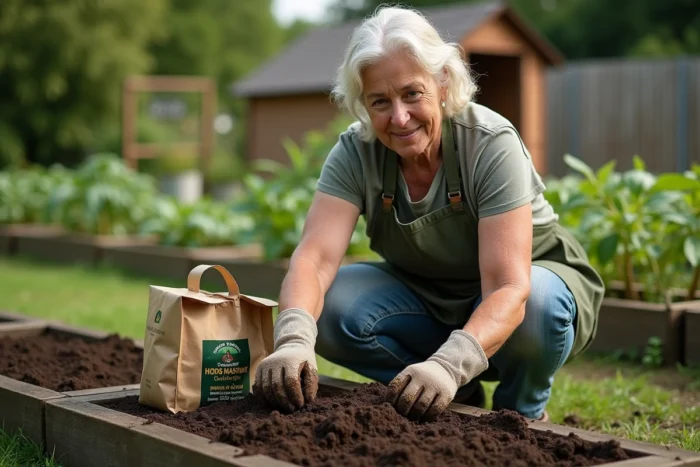
Horse manure sold in garden centers or supermarkets comes in very different forms: fresh, composted, dehydrated in pellets. Each format alters the concentration of nutrients, ease of storage, and the risk of root burn. Comparing these parameters before purchasing helps avoid costly mistakes for the soil and crops.
Pelleted or composted horse manure: how the format affects fertilization
Garden centers offer horse manure in two main categories: composted manure (in bags or bulk) and dehydrated manure compacted into pellets. The difference is not limited to packaging. It concerns the speed of nutrient release, the carbon/nitrogen ratio, and the ability to improve soil structure.
| Criterion | Composted manure (bag) | Dehydrated manure (pellets) |
|---|---|---|
| Nutrient release | Gradual, over several months | Faster after watering |
| Risk of root burn | Low if well-matured | Low (stabilized product) |
| Improvement of soil structure | High (addition of organic matter) | Moderate (reduced volume) |
| Storage | Bulky, heavy bag | Compact, easy to store |
| Odor | Present upon opening | Almost nonexistent |
Composted manure remains the most comprehensive choice for a gardener looking to regenerate a depleted soil in the long term. Pellets are better suited for occasional use or for container crops where the substrate volume is limited.
To better understand the price of horse manure at Lidl, it is necessary to relate the cost to the actual weight of organic matter added to the soil, and not just the gross weight of the bag.
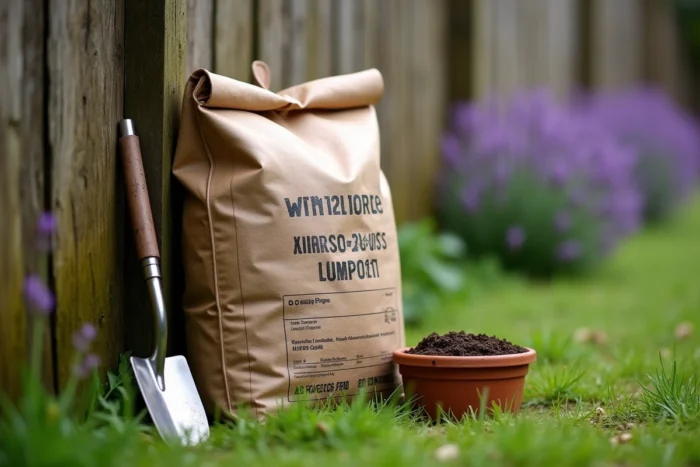
Maturity of horse manure: the trap that damages young plants
Several recent field reports converge on one point: fresh manure can burn the roots of young plants, particularly tomatoes, lettuce, and shallow-rooted plants. The problem does not come from the manure itself, but from its incomplete fermentation.
Fresh manure contains a high proportion of ammoniacal nitrogen. When in contact with roots, this nitrogen causes necrosis. Pre-composting transforms this nitrogen into assimilable forms and lowers the internal temperature of the pile.
How to check the maturity of manure
- The color should be dark brown to black, never straw yellow. Manure that is still light contains undecomposed bedding, a sign of an unfinished process.
- The smell should resemble forest soil, not ammonia. A sharp odor indicates an excess of volatile nitrogen, which is dangerous for the roots.
- The texture should be crumbly and homogeneous. Visible straw pieces signal insufficient composting time.
In practice, composting horse manure for several months before incorporating it into the soil eliminates almost all risk. For bags sold in supermarkets, checking for the label “composted” or “matured” remains the first reflex.
Application periods according to crops in the vegetable garden
Horse manure is not spread in the same way depending on the season and the type of crop targeted. Autumn remains the reference period for a base application, as the manure has all winter to decompose and integrate into the soil before spring planting.
In early spring, an application of well-composted manure benefits nitrogen-hungry crops. Tomatoes, squash, and zucchini respond particularly well to this amendment. In contrast, root vegetables like carrots prefer soil amended the previous year, as an excess of fresh organic matter causes forking and deformities.
Horse manure and peonies: a specific use case
Specialized content now recommends applying horse manure to peonies in the fall or very early spring, ensuring to use a composted product. Peonies do not tolerate direct contact with fresh amendments well: their fleshy roots are sensitive to burns.
A mulch of composted manure placed in a crown around the base, without touching the collar, nourishes the plant throughout the growing season.
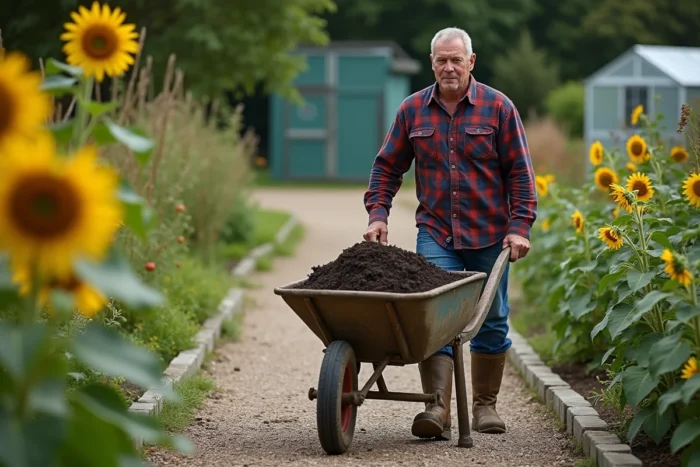
Storing horse manure at home: practical rules and neighborhood constraints
Buying horse manure in bags solves part of the logistical problem, but not all of it. Prolonged storage of an open bag degrades the quality of the manure: exposure to rain, loss of nitrogen through volatilization, development of unwanted molds.
For an opened bag, sealing it tightly and storing it in a ventilated area away from rain is sufficient to maintain the product’s properties for a few weeks. Beyond that, it is better to incorporate the remainder directly into compost.
Bulk manure and local storage rules
Gardeners who collect fresh manure from equestrian centers must consider constraints that are often overlooked. Several communities remind of storage rules related to the minimum distance from neighboring homes and water points. A pile of fresh manure generates percolation juices rich in nitrates, which can contaminate surface water tables.
- Storing the pile on an impermeable surface or on a thick tarp limits infiltration into the soil.
- Keeping storage away from property lines reduces odor nuisances and neighborhood conflicts.
- Covering the pile with a breathable tarp accelerates composting while containing odors.
The final quality of the manure also depends on the original bedding. Manure from wheat straw composts faster and provides a better carbon/nitrogen ratio than manure mixed with wood chips, which further acidifies the soil.
The choice of format (composted bag, pellets, fresh bulk) determines both the result in the garden and the dosage or application period. Well-matured manure, stored correctly and applied at the right time, transforms the soil structure over several seasons, whereas a poorly chosen product risks damaging crops from the first use.