
A white t-shirt, a raw denim jean, white sneakers. Three pieces that millions of people wear every day. What distinguishes one silhouette from another are the accessories that complete the outfit. Choosing the right accessories daily is not an innate talent, but a simple framework that anyone can apply.
Materials and finishes: what makes the difference between a disposable accessory and a durable one
You may have noticed that a new belt can look worn after three months, while another ages without losing its appeal? The answer rarely lies in the price. It is found in the material and the finish.
A full-grain leather bag develops a patina over time. A faux leather bag cracks. The material determines the visible lifespan of an accessory, not just its mechanical resistance. Before buying, turn the item over: check the seams, the edges, the hardware. A zipper that catches in the store will not improve with use.
For jewelry, the logic is the same. A thin gold plating oxidizes upon contact with sweat or perfume. A piece made of solid brass or stainless steel retains its shine much longer. The choice of material directly influences the replacement frequency, thus the actual budget over a year.
This quality-focused approach aligns with a broader trend: more and more brands are structuring their offerings around recycled or upcycled materials. Rivedroite Paris, for example, incorporates CSR thinking into the choice of materials for its bags and accessories. Exploring accessories on Fimina Mag allows you to spot pieces that combine style and durability without compromising one for the other.

Accessories and colors: the three-tone rule for a coherent look
Why do some outfits appear effortlessly assembled? Often because the colors of the accessories communicate with each other. A simple method is to limit the overall palette of the outfit (including clothing and accessories) to a maximum of three tones.
Three tones are enough to structure a silhouette without overwhelming it. For example: navy blue jeans, a cream sweater, then accessories in a third tone (cognac for the belt and bag, or black for the shoes and watch). This principle avoids harmony mistakes without requiring colorimetry skills.
Metals and jewelry: stick to one family
Mixing gold and silver in the same outfit creates a sense of visual disorder. Choose one metal family per look. If your watch is silver, orient rings and necklace towards the same tone. This is not an absolute rule, but an effective shortcut when dressing quickly in the morning.
Colorful accessories: one focal point
A brightly patterned scarf, a pair of statement earrings, and a red bag: taken separately, each works. Together, they neutralize each other. One colorful accessory draws the eye, three disperse it. Choose your standout piece, then match the rest in neutral tones.
Second hand and vintage: building a unique style at a lower cost
The re-commerce of accessories (bags, belts, jewelry, scarves) now represents a concrete lever for building a distinctive style. The market has changed, and buying new is no longer the only option for creating a quality accessory wardrobe.
A vintage bag from the 1990s, a brooch found at a flea market, a leather belt discovered on a second-hand platform: these pieces bring a character that standardized new items cannot replicate. A second-hand accessory offers uniqueness in addition to savings.
Players like RAEV Maroquinerie push this logic even further. Their bags and small leather goods are made from textile materials destined for abandonment (old advertising tarps, workwear). Each piece is by definition unique, which meets a dual requirement: reducing environmental impact and standing out visually.
- Check the condition of closures, handles, and seams before buying a second-hand accessory. A structural defect is not easily repaired.
- Favor pieces made from noble materials (leather, brass, silk) that withstand the passage of time better than synthetic materials.
- Test resale: a quality accessory bought second-hand can often be resold at the same price, making the investment almost negligible.
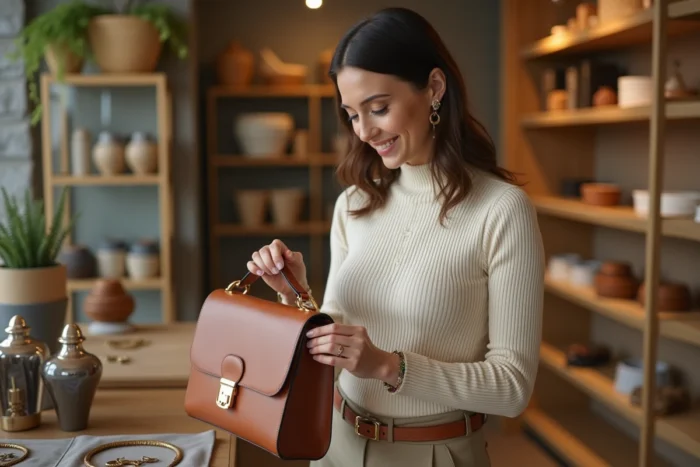
Choosing accessories based on silhouette and occasion
An accessory does not work in isolation. It works in context. The same necklace can enhance a V-neckline and weigh down a turtleneck. Before finalizing a purchase, ask yourself a simple question: how many outfits already in my closet does this accessory work with?
Belts and proportions
A thin belt worn high visually narrows the waist. A wide belt worn on the hips structures a straighter silhouette. The choice depends on the cut of the garment, not a current fashion trend. High-waisted pants call for a thin belt, while an oversized blazer pairs well with a more pronounced belt.
Bags: format and daily use
A bag that is too small forces you to juggle multiple containers. A bag that is too large disrupts the silhouette. The right bag is one that holds your everyday items without excessive volume.
- For office use, a structured format (tote, soft briefcase) protects a laptop and maintains a polished look.
- For short outings, a small crossbody bag or clutch frees your hands and lightens the silhouette.
- For mixed days (work then outing), a modular bag with a removable pouch avoids the need to change bags.
The versatility of an accessory determines its frequency of use. A piece worn three times a week justifies a higher investment than a piece reserved for rare occasions.
Ultimately, the choice of accessories daily rests on three filters: the quality of the material, the coherence of colors, and the suitability with the silhouette. Applying these three criteria before each purchase reduces mistakes, limits the accumulation of unnecessary pieces, and gradually builds a readable personal style.