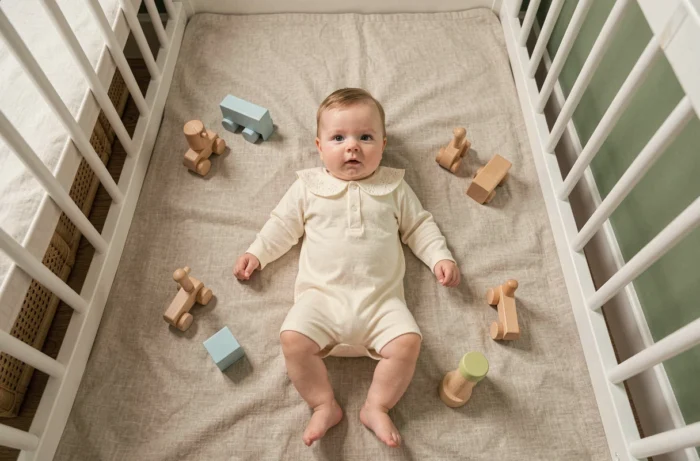
A baby changes clothing size every few weeks. This biological reality shapes any clothing approach: buying too many pieces in the same size means accumulating barely worn clothes. Dressing baby with style and comfort therefore requires thinking in terms of rapid rotation, versatility of pieces, and ease of care, long before considering colors or prints.
Baby capsule wardrobe: the principle that avoids unnecessary purchases
The concept of a capsule wardrobe for babies is based on a limited number of interchangeable garments. The goal is to cover all daily scenarios (diaper changes, naps, outings, meals) with a minimum of pieces while maintaining visual coherence.
The logic differs from an adult capsule wardrobe in one major aspect: the washing cycle. A baby soils several outfits a day. Each piece in the wardrobe must therefore withstand frequent washes at sufficient temperatures without deforming or losing color. Thick cotton, cotton jersey, and lightweight fleece are more durable than fine synthetic materials or delicate finish fabrics.
Specifically, a functional capsule for a given size revolves around a core of essential pieces, complemented by two or three dressier items for outings. By grouping compatible colors (neutral tones, one accent shade), each combination creates a cohesive outfit effortlessly. Specialized shops like lesbebesfringueurs.fr facilitate this approach by offering collections designed to mix and match freely.
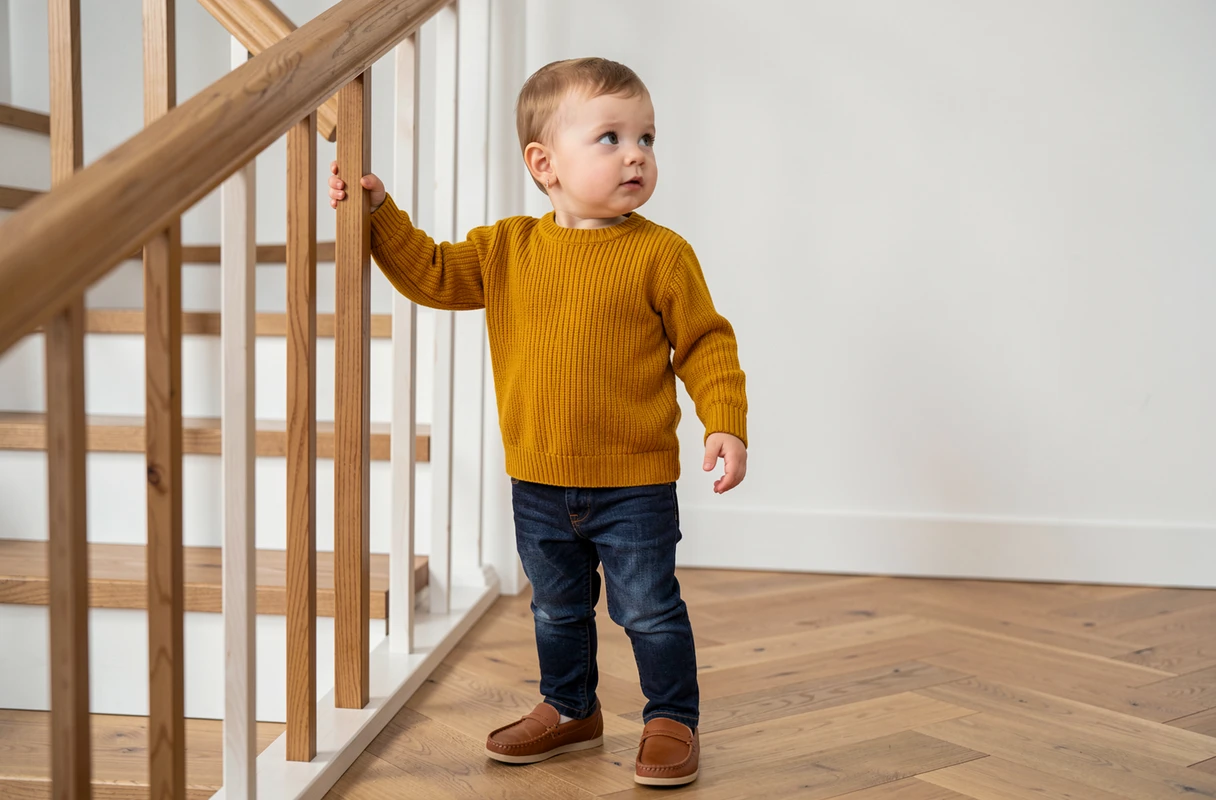
The key pieces of a newborn capsule
- The bodysuit with cross-opening or snap closures at the front: it can be changed without fully lifting baby, which simplifies diaper changes on the go.
- The romper or full pajamas: versatile, it works for both night and quick outings. Prefer snap closures over zippers, which can irritate the skin at the chin.
- The wide elastic waistband pants: comfortable over the diaper, easy to put on, it pairs well with any bodysuit.
- The cotton knit cardigan or sweater: the ultimate thermal adjustment layer, quickly removed if the temperature changes.
Cuts and closures: comfort lies in technical details
Current baby fashion trends emphasize loose silhouettes and easy-to-wear clothing. This is not just an aesthetic concern: a loose fit allows the baby to move freely, bend their legs in a physiological position, and avoid pressure on the abdomen after meals.
Flat seams (or seams turned outward) prevent chafing on skin folds. Interior labels are a frequent source of irritation, and brands that print them directly onto the fabric offer a real advantage in daily use.
Closures: snaps versus buttons
Snap buttons at the crotch are the norm for quick changes. Their placement matters: snaps aligned along the entire length of the leg allow for diaper changes without completely undressing the baby. Classic buttons, more aesthetically pleasing on formal wear, slow down changes and pose a choking hazard if they come loose.
For nighttime, the sleeping bag replaces the blanket and constitutes a full garment. Its choice depends on the room temperature: a lightweight cotton model is suitable for temperate rooms, while a padded sleeping bag is better for cooler nights. The neckline should be snug so that baby cannot slip inside.
Dressing baby according to temperature: the layering method
The principle of layering with thin layers remains the most reliable method for adapting baby’s outfit to temperature variations, especially during unexpected outings. A baby does not regulate their body temperature as well as an adult, making clothing flexibility a priority.
The often-cited rule is to dress baby in one layer more than what an adult would wear in the same conditions. In practice, this translates to three layers in winter (bodysuit, intermediate garment, romper or coat) and one to two layers in summer (bodysuit alone or bodysuit plus lightweight garment).
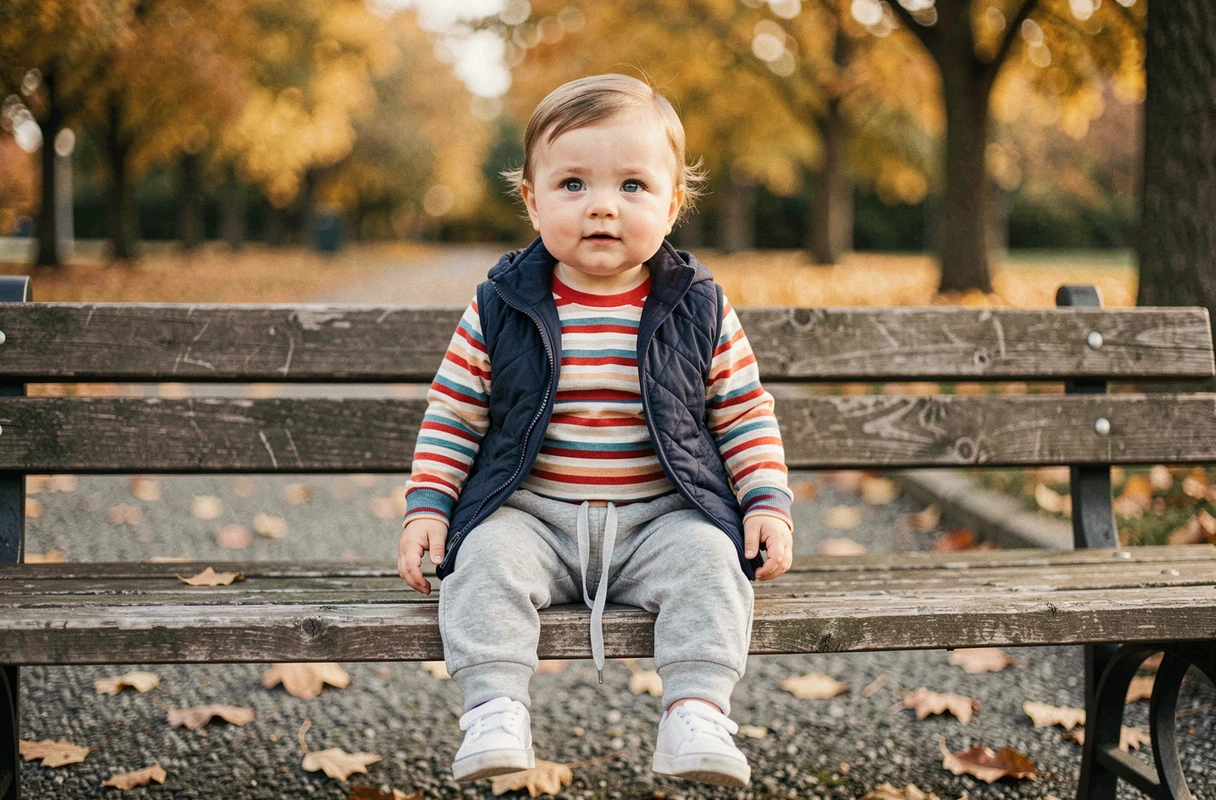
Common mistakes in summer and winter
In summer, the temptation to leave baby in just a diaper is understandable, but a thin cotton bodysuit protects the skin from UV rays and sweat better than bare skin exposed to the elements. Synthetic materials retain heat and promote irritation, even on seemingly lightweight clothing.
In winter, the opposite mistake is to over-bundle baby, especially in a car seat or stroller. A baby that is too bundled sweats and then cools down quickly once wet. Removing the thick coat and replacing it with a blanket over the car seat straps remains the safest recommendation.
Stylish everyday baby outfits: simple combinations that work
The style of a baby outfit does not depend on the number of pieces or the price, but on the coherence of colors and proportions. A limited palette (two neutrals plus one bold color) produces harmonious combinations without having to think each morning.
Prints work best as a single accent: one patterned garment (stripes, polka dots, animal print) paired with solid pieces. Layering two prints creates a messy effect, even on a baby.
Accessories change the perception of a basic outfit. A headband, a little knitted hat, or contrasting socks transform a bodysuit-pants set into a photogenic outfit. Style comes from a well-chosen detail, not from a multitude of pieces.
Baby fashion changes quickly, but pieces that transcend seasons and sizes are those with a simple cut, durable material, and easy-to-coordinate color. Building a small collection around these criteria remains the most reliable way to dress baby stylishly without unnecessarily filling drawers.