
We want to reproduce a fog effect for a Halloween party, a home show, or an experience with children, and we keep coming across the same advice: “mix baking soda and vinegar.” The problem is that baking soda alone does not produce smoke. What we actually get is a spectacular fizz that releases carbon dioxide, an invisible gas.
To transform this reaction into a true visual effect of mist, we need to understand what happens chemically and add one or two elements that most tutorials forget to mention.
Baking soda and vinegar reaction: why it’s not really smoke
When vinegar is poured over baking soda, acetic acid reacts with sodium bicarbonate to form sodium acetate, water, and CO₂. This carbon dioxide causes the fizzing, bubbles, and foam that overflows from the container. Visually, it’s impressive.
CO₂ is a gas that is heavier than air. It sinks and accumulates close to the ground or work surface. This can actually be demonstrated by bringing a lit candle close: the flame goes out upon contact with the gas, creating a spectacular effect during a home chemistry workshop.
But this gas remains invisible. No white wisps, no creeping fog. For those looking for the steps to make smoke with baking soda, the disappointment often comes from this confusion between fizzing and visible smoke. The distinction matters because it conditions the materials to prepare.

Materials and proportions for a visible mist effect at home
To achieve a result that resembles smoke (white fog, creeping mist), we combine the acid-base reaction with an element capable of condensing ambient moisture. Two methods work well indoors without expensive materials.
Method with hot water and ice cubes
Place the baking soda in a wide container (mixing bowl, cut bottle). Pour in very hot water, then the vinegar. The CO₂ produced, passing over ice cubes placed at the edge of the container, rapidly cools the humid air and creates visible condensation, a white mist that flows downward.
Adding a small amount of dish soap (a few drops) traps the CO₂ in bubbles that burst at the surface. This multiplies the micro-droplets in suspension and enhances the visual effect.
Closed bottle method with balloon
Pour about a cup of vinegar into a plastic bottle. Wrap two tablespoons of baking soda in a piece of paper towel and drop it into the vinegar. Immediately cap the neck with a balloon. The CO₂ inflates the balloon. You can then slowly release the gas over a cold source to create a stream of mist.
Here’s the equipment to gather before starting:
- Food-grade baking soda, one to two tablespoons depending on the size of the container
- White vinegar (or apple cider vinegar), about one cup for a two-liter bottle
- Hot water, ice cubes, and a few drops of dish soap for the mist method
- Wide container or plastic bottle, paper towel, and balloon for the confined method
- Food coloring (optional) to tint the foam during a decorative volcano
Safety and common mistakes with baking soda indoors
The baking soda-vinegar reaction is safe on a small scale. The CO₂ produced is not toxic in the amounts generated by a few tablespoons of powder. Feedback varies on this point when moving to larger volumes: in a poorly ventilated room, an excess of CO₂ can cause slight respiratory discomfort.
Three precautions to keep in mind:
- Work in a well-ventilated space, especially if you’re doing multiple trials with children
- Never heat baking soda dry in a closed container, as pressure can cause a lid to pop off
- Test the proportions on a small scale before filling a large container; the fizz can overflow faster than you think
The most common mistake is pouring all the vinegar at once. The reaction is then violent, brief, and all the CO₂ escapes before you can channel the mist. It’s better to pour the vinegar gradually to prolong the effect.
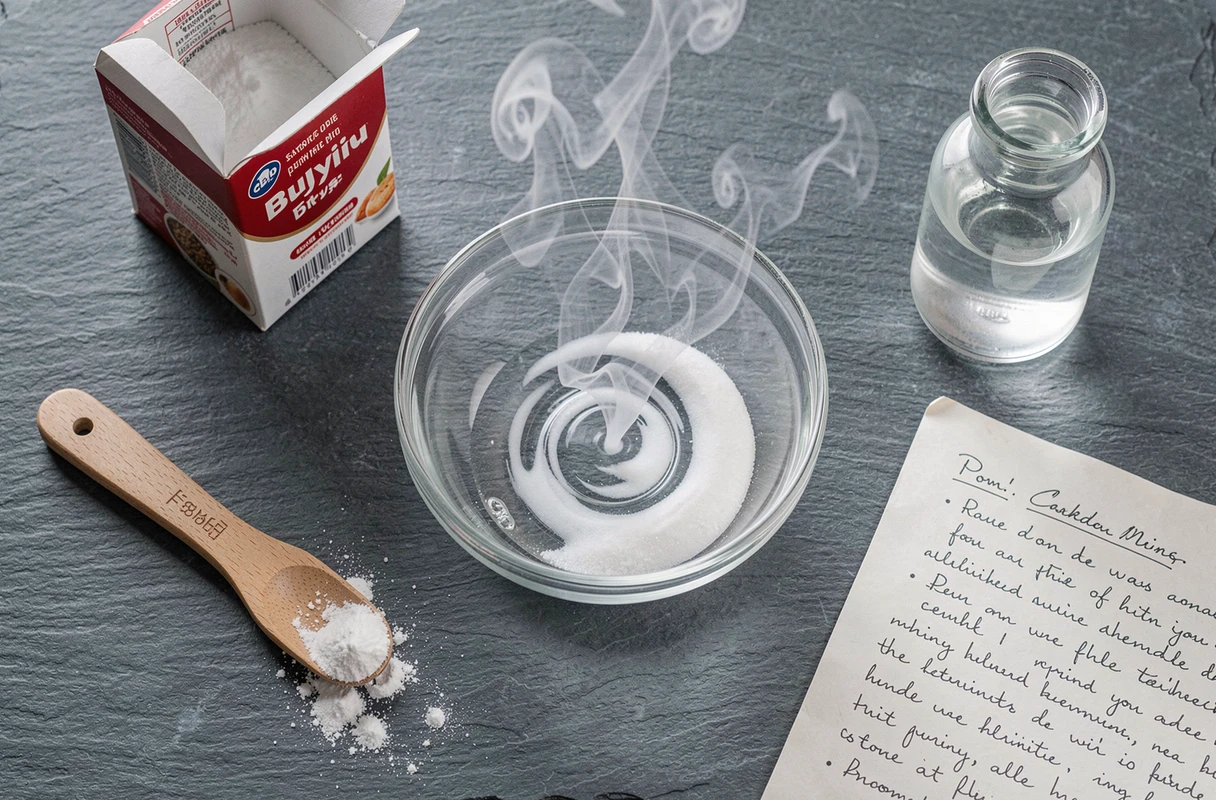
Smoke effect for Halloween or home show: adapting the staging
Since CO₂ is heavier than air, the mist effect stays close to the ground. You can exploit this property by placing the container high up (on a shelf, at the edge of a table) so that the mist cascades down. In a dark hallway with low lighting, the result creates a true horror movie set.
For a tabletop volcano, mold a conical shape with modeling clay around a pot or cut bottle. Add red food coloring to the vinegar, a tablespoon of dish soap, then pour over the baking soda. The colored foam overflows and simulates a lava flow, while the invisible CO₂ creates a slight veil close to the table if the room is cool.
For a more durable mist diffuser, some add dry ice to the mixture. The effect is significantly denser. However, dry ice is not the same as baking soda: it’s solid CO₂, which requires special precautions (gloves, ventilation, never touch with bare hands). This goes beyond the “baking soda at home” framework.
Baking soda and smoke odors: the other use to know
Useful paradox: baking soda also serves to eliminate smoke odors in the home. After a barbecue that was too smoky or to reduce a persistent cigarette smell, sprinkling baking soda on textiles (sofa, carpet, curtains) and letting it sit for several hours before vacuuming yields decent results on light odors.
For stubborn odors (embedded chimney smoke, old cold tobacco), baking soda shows its limits. Activated charcoal is described as more effective in this case. Baking soda remains a light odor absorber, suitable for regular maintenance rather than deep decontamination.
Whether for creating a visual effect or for cleaning up afterward, baking soda remains a versatile product to keep on hand. The key to a good mist effect comes down to three words: gradual vinegar, cold air, and patience.