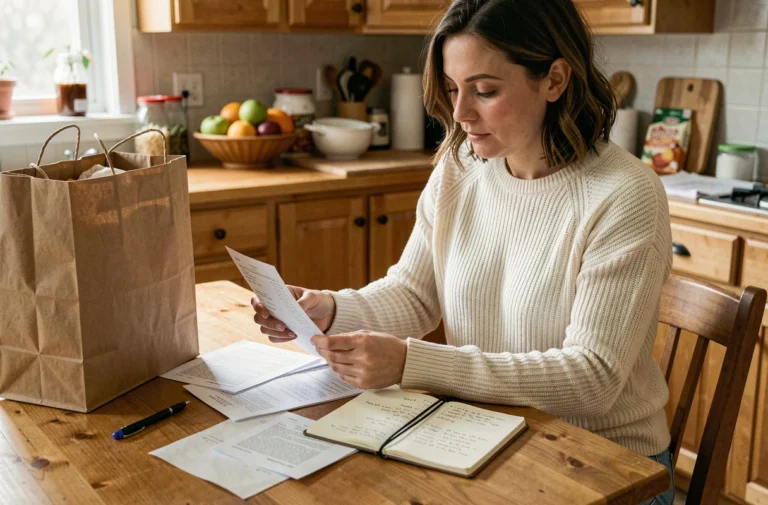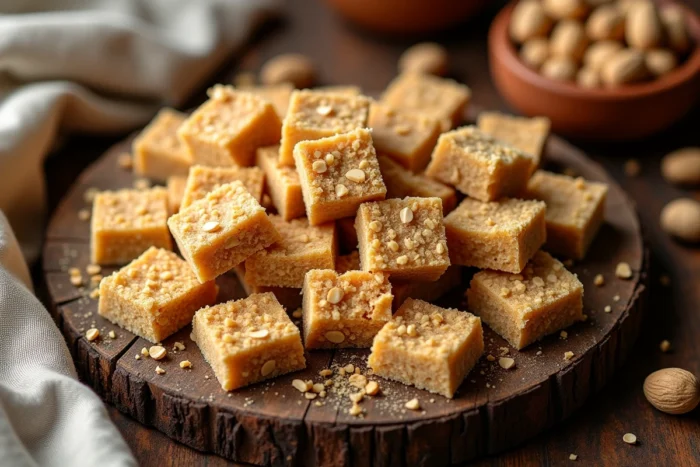
The Brazilian paçoca is based on three ingredients, but the proportions of peanut, sugar, and salt vary by region, brand, and usage. Comparing these variations helps to understand why some versions crumble in the mouth while others hold together in a compact block, and why the Brazilian market now distinguishes between classic paçoca and its reformulated versions.
Classic paçoca and no added sugar paçoca: what the formulations reveal
The Brazilian market today offers two main families of paçoca. The traditional version combines roasted peanuts, sugar, and a pinch of salt. Recent versions labeled “zero açúcar” replace sugar with sweeteners to meet the demand for reduced sugar and stricter nutritional regulations.
| Criterion | Classic Paçoca | No Added Sugar Paçoca |
|---|---|---|
| Sweetening ingredient | White sugar or brown sugar | Sweetener (maltitol, stevia, or sucralose depending on the brand) |
| Texture | Crumbling, melting, disintegrates on contact with the tongue | Often drier, slightly grainy |
| Perceived peanut flavor | Balanced by sugar, roasted aroma in the background | More pronounced, the peanut clearly dominates |
| Consumption target | General public, Festas Juninas, everyday confectionery | People monitoring their sugar intake, developing segment |
| Role in baking | Topping, ice cream filling, base for brigadeiro | Less used in cooking, consumed as is |
This table highlights a texture gap directly related to the role of sugar. In the classic version, sugar acts as a binder during compression, giving that characteristic crumbly consistency. Without it, cohesion relies on the natural oil content of the peanut, which alters the candy’s hold.
To explore the exact proportions and detailed steps, the paçoca recipe on Gourmand Sans Gluten details each phase of the artisanal preparation.
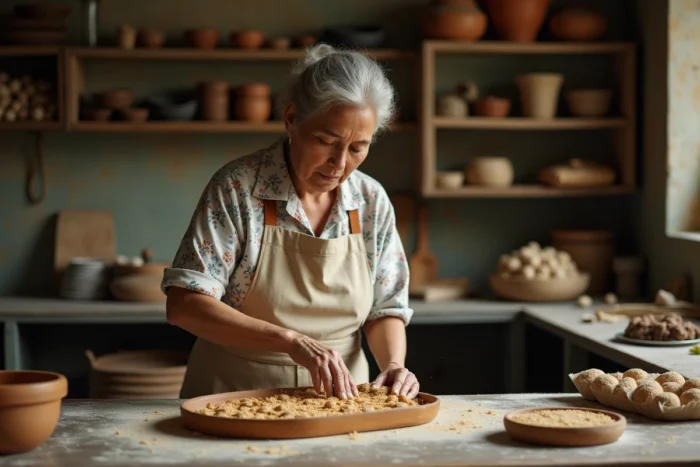
Roasting and grinding: the two parameters that separate a successful paçoca from a bland one
Dry roasting, without fat, concentrates the aromas of the peanut through the Maillard reaction. An under-roasted peanut gives a flat-tasting paçoca. A burnt peanut produces a bitterness that masks everything else.
The reliable indicator remains color: a uniform golden brown without black spots signals correct roasting. The time varies depending on the equipment (oven, pan, air fryer), but it is the color, not the duration, that matters.
Grinding: particle size and oil release
Grinding determines the final texture more than any other parameter. Over-grinding turns the peanut into a greasy paste (resulting in peanut butter, not paçoca). Under-grinding leaves chunks that prevent compression.
- Short pulse grinding: the most reliable method with a food processor, as it avoids overheating that prematurely releases oil
- Pilão (traditional mortar): used in Brazilian artisanal recipes, it produces an irregular grain that creates a more rustic texture
- Continuous powerful blender: high risk of turning into paste in seconds, best reserved for sweet farofa preparations rather than compressed paçoca
The ideal particle size resembles coarse sand, with some larger fragments that add crunch. If the powder sticks to your fingers when pressed, the oil has started to come out and compression will be difficult.
Paçoca as a Brazilian cultural marker beyond confectionery
Recipe articles generally present paçoca as a candy of the Festas Juninas, those June and July festivals that celebrate Catholic saints and the beginning of harvests. This reading is accurate but partial.
Today, paçoca functions as a cultural identity marker of Brazilian culture, mobilized well beyond seasonal festivities. It is found in contexts of culinary heritage defense, alongside brigadeiro or pão de queijo.
Paçoca in bowls and contemporary snacking
The most visible recent evolution concerns the integration of paçoca into formats unrelated to traditional confectionery. Bowls like “Amazonia Brasileiro,” combining açaí, granola, fresh fruits, and crumbled paçoca, have emerged as snacking proposals.
This hybridization between traditional confectionery and health snacking repositions paçoca as a versatile ingredient. It is no longer just a compressed candy to nibble on: it becomes a textural topping, a source of plant-based protein in a sweet bowl, a crunchy contrasting element.
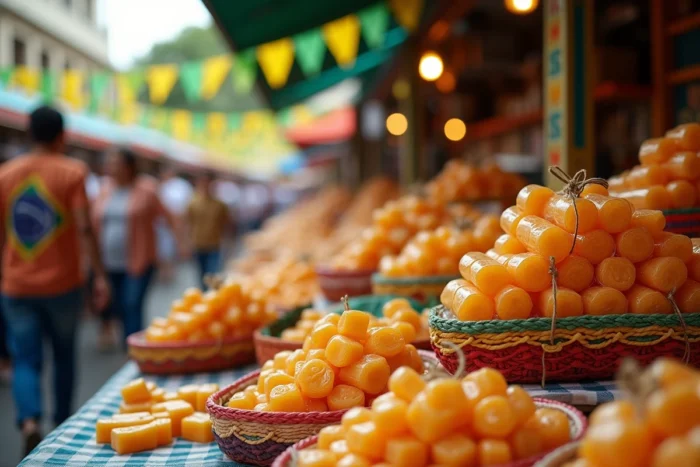
Compression and storage errors that ruin texture
Compression is the least documented and most often failed gesture. After grinding, the peanut-sugar mixture must be pressed into a mold (traditionally a small cylinder, hence the name “paçoca rolha,” rolha meaning cork).
The pressure must be firm and singular. Multiple successive pressures expel air but also oil, resulting in a compact and greasy candy instead of a crumbly one. A single firm pressure produces the texture closest to artisanal.
Storage: the main enemy is moisture
Paçoca contains almost no water. Its direct enemy is ambient moisture, which softens the surface and destroys the crumbly texture within hours in a humid environment.
- Store in an airtight container at room temperature, away from direct heat
- Do not refrigerate: cold creates condensation upon removal, which softens the surface
- Separate pieces with parchment paper if stacked, to prevent them from sticking together
The shelf life directly depends on the sugar content. No added sugar versions, lacking the preservative effect of sucrose, degrade faster in texture and aroma than classic versions.
Paçoca remains a confectionery whose apparent simplicity masks precise technical parameters. The choice between classic and reformulated versions, the degree of roasting, the grinding particle size, and the compression method each determine a different result. Reproducing the authentic crumbly texture at home mainly requires respecting these steps without trying to rush the process.