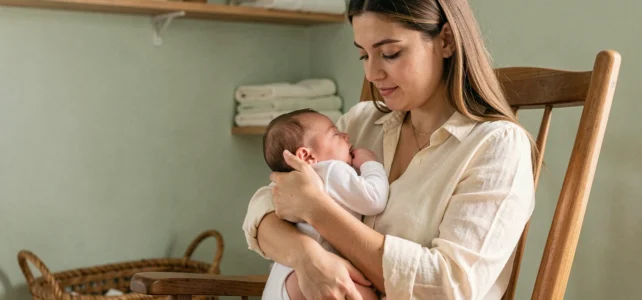
The skin of an infant is significantly thinner than that of an adult, and its skin barrier takes several months to stabilize. This observation guides all choices regarding daily care and hygiene. Supporting the baby with appropriate gestures requires distinguishing between what constitutes a useful precaution and what is merely marketing, as a product labeled “natural” is not automatically better tolerated by immature skin.
Baby hygiene products: skin tolerance before the label
The childcare aisles are filled with ranges labeled “organic” or “natural.” This mention is reassuring, but it does not guarantee compatibility with the fragile skin of an infant on its own. Recent recommendations in pediatric dermatology converge on a more reliable criterion: favor formulas that are fragrance-free, alcohol-free, and hypoallergenic.
A cold saponified superfat soap, for example, is suitable for daily washing because it does not contain aggressive surfactants. Oleocalcareous liniment remains a tried-and-true option for diaper changes. In contrast, baby colognes, even those labeled organic, often contain aromatic compounds that may provoke reactions on still-permeable skin.
The logic to remember is simple: the shorter the ingredient list, the more likely the product is to be suitable. Parents wishing to delve deeper into the subject will find useful references on the Naturally Mom website for babies, particularly for comparing the compositions of common products.
Bath frequency and daily hygiene for infants

Bathing the baby every day is still a common habit, but two to three baths per week are sufficient for most infants. This frequency, documented by several recently published health sources, aims to prevent skin dryness. Between baths, targeted cleaning of key areas (face, neck, folds, bottom) with a damp compress or cotton soaked in warm water perfectly fulfills hygiene needs.
The temperature of the bath water deserves special attention. A reliable bath thermometer is safer than an elbow test, and the room should be adequately heated to prevent rapid cooling upon exit.
Care for the face, nose, and nails
Saline solution is the most versatile ally for cleaning the nose and eyes. A single-use vial minimizes the risk of contamination. For nails, a rounded-tip scissors designed for infants allows for safe cutting, preferably after the bath when the nails are softened.
Massaging after the bath with a neutral vegetable oil (sweet almond, calendula) helps nourish the skin while establishing a moment of contact. This gesture is not trivial: feedback from early childhood professionals highlights its effect on the infant’s relaxation and sleep quality.
Safe sleep for infants: what current recommendations advocate
Sleeping arrangements remain one of the areas where family practices diverge most from official recommendations. Current data, aligned with WHO positions and protocols for preventing sudden infant death syndrome, can be summarized in a few clear rules:
- Always lay the baby on their back, in a separate bed without a pillow, blanket, or bumper, using a firm mattress that fits the bed dimensions.
- Keep the crib in the parents’ room for the first six months, which facilitates nighttime awakenings while reducing the risk of SIDS.
- Maintain the room temperature around a moderate value, with a sleeping bag suitable for the season rather than a loose blanket.
These precautions may seem well-known, but field surveys show that the use of blankets or stuffed animals in the infant’s bed remains common. Therefore, the repetition of these guidelines is not superfluous.

Sun protection and outings with the baby: limits of products alone
Sun protection is an angle often missing from guides on daily care for infants, even though direct sun exposure is not recommended before the age of one. An infant’s skin does not yet produce enough melanin to defend against ultraviolet rays.
Before any sunscreen, the first barrier remains clothing: wide-brimmed hat, covering clothes, sunshade on the stroller. Mineral sunscreens (based on zinc oxide or titanium dioxide) are better tolerated than chemical filters, but their application does not exempt one from avoiding peak exposure hours.
Field feedback varies on the minimum age for using sunscreen. Some brands indicate “from birth,” while others recommend waiting six months. In the absence of strict consensus, caution dictates limiting outings to the cooler hours and physically covering exposed skin.
Choosing textiles in contact with the baby’s skin
Bodysuits, sleeping bags, and fitted sheets spend more time in contact with an infant’s skin than any care product. Therefore, the choice of textile has a direct impact on skin comfort.
- Certified organic cotton (GOTS for example) limits exposure to pesticide residues and harsh dyes.
- Washing new textiles before first use removes some of the chemical finishes applied in factories.
- A fragrance-free and softener-free detergent reduces the risk of irritation, especially during the first months.
The reflex to multiply care products sometimes forgets that the baby’s first skin contact is with fabric, not with cream. Investing in quality and well-maintained textiles is an integral part of a coherent care approach.
Supporting an infant daily ultimately relies on a few well-calibrated gestures. Fewer products, suitable textiles, compliant sleeping arrangements, and physical sun protection cover the vast majority of needs. The rest relies on careful observation of each baby, whose reactions guide better than any standardized list.