
The rental price of a storage unit varies from simple to five times depending on the city, size, and duration of commitment. For the same volume, you can go from less than 15 euros per month in the suburbs to over 50 euros in central Paris. Here are ten concrete levers, tested in the field, to reduce the bill without sacrificing the security or accessibility of your belongings.
1. Choose a center in the suburbs rather than in the city center
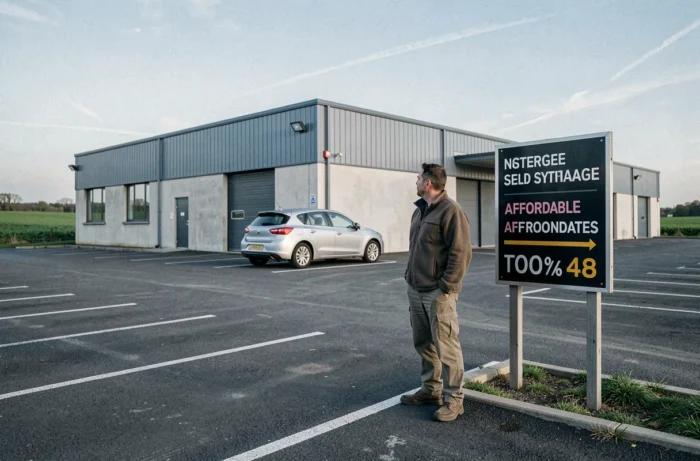
In Île-de-France, the average price per square meter is around 32 euros per month. The extremes range from about 11 euros per square meter in the greater outskirts to over 55 euros in central Paris, which is a ratio of 1 to 5 for a comparable level of service.
In practical terms, moving your unit 20 or 30 minutes from your home can halve or even reduce the rate by two-thirds. If you only access the unit once or twice a month, the extra travel cost is much less than the rent difference. You can compare the rental prices for storage units on ImmoVite to visualize these discrepancies between nearby geographic areas.
2. Adjust the surface area to the actual volume of your belongings
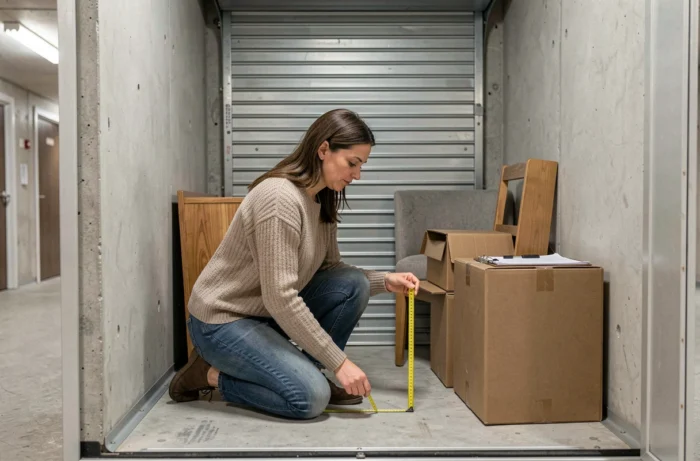
The price is calculated based on the rented surface area. Renting one square meter too much for twelve months represents several hundred euros lost. The contents of a two-room apartment typically fit into a four-square-meter unit, provided you make use of the ceiling height (often between 2.5 and 3 meters).
Dismantling bulky furniture before storage can easily gain one to two square meters. Tables, wardrobes, beds: everything that can be dismantled should be. Wrap the legs and hardware in a bag taped directly to the corresponding piece of furniture.
3. Stack with boxes of the same size

Boxes of different sizes create dead spaces that are impossible to fill. By using standard boxes of the same size, you can stack from floor to ceiling like a game of Tetris. The usable volume of the unit increases, and you may be able to downgrade to a smaller rental size.
Opting for double-walled reinforced boxes prevents the lower layers from collapsing. A box that sags makes the entire stack unstable and forces you to spread items on the floor, wasting space.
4. Negotiate a sliding scale rate based on duration

Most self-storage centers apply sliding scale pricing. The longer the commitment, the lower the monthly price. Regularly, discounts of around 10 to 20% are observed for a commitment of six months or more compared to the month-to-month rate without commitment.
Be careful: a long commitment is only worth it if the storage duration is certain. Paying for three unnecessary months at a reduced rate costs more than two months at the full price.
5. Opt for a unit on an upper floor

In multi-level centers, units on upper floors are often cheaper than those on the ground floor. Access is less convenient for heavy items, but if you are primarily storing boxes, clothes, or archives, the difference in comfort remains minimal.
A freight elevator is usually available. Checking its load capacity and availability hours before signing helps avoid unpleasant surprises on moving day.
6. Rent in the off-season

The demand for storage units skyrockets between May and September, a period that concentrates the majority of moves. Prices and availability follow this trend. Renting in autumn or winter allows you to benefit from promotions, sometimes the first month free or a reduced rate for the first three months.
If the need for storage is related to renovation work, planning the project outside of peak season simultaneously lowers both the price of the unit and that of the contractors.
7. Compare the total cost rather than the displayed price

The displayed monthly rate does not tell the whole story. Some centers charge extra for insurance, the padlock, administrative fees, or access outside standard hours. Others include everything in a single price.
- Mandatory insurance generally covers water damage and fire, but rarely theft with break-in. Check the compensation limits before signing.
- The padlock provided by the center often costs more than one purchased at a hardware store, for equivalent security.
- Administrative fees, when they exist, can be easily negotiated during off-peak times.
Comparing the total cost over the planned duration, all fees included, helps avoid choosing a center with an attractive rate but high additional costs.
8. Favor flexibility without fixed commitment

Offers without rigid commitments are on the rise. You pay a little more per month, but you avoid financing weeks of unnecessary storage. For a need of two and a half months, a flexible contract is cheaper than a quarterly package that you do not fully use.
Returns vary on this point depending on the companies: some impose a one-month notice, while others allow termination within fifteen days. Read the general conditions before comparing rates.
9. Share a unit among several tenants

Sharing storage units is still little known, but it can divide the bill by two or three. Two neighbors each storing the contents of a basement can share a five-square-meter unit instead of each renting a small individual unit.
Formalizing the sharing in writing protects each party: who pays what, who accesses when, and how to manage the end of the sharing. Some centers accept multiple names on the contract, others do not. Ask the question during the first call.
10. Reduce the duration by sorting before storing

We often underestimate the volume of items we will never reuse. Selling, giving away, or throwing away before filling the unit reduces both the necessary surface area and the rental duration. Fewer items to store means a smaller unit, freed up more quickly.
Every month of saved rental counts more than a few euros saved on the unit price. A serious sorting before storage remains the most cost-effective lever, far ahead of any price negotiation.