Ingrid Betancourt, a Franco-Colombian figure marked by more than six years of captivity at the hands of the FARC, has rebuilt her life far from Colombia. The question of where she resides often comes up in searches. The answer is two words: Paris, France.
Dual nationality and geographical anchoring of Ingrid Betancourt
Born in Bogota in 1961, Ingrid Betancourt grew up between Colombia and France. Her father, Gabriel Betancourt, a Colombian diplomat, and her mother, Yolanda Pulecio, enrolled their children in the French educational system from an early age. This early connection to Paris largely explains her current choice of residence.
After her release in 2008, she chose to settle back in France. To understand precisely where Ingrid Betancourt lives today, one must look towards the French capital, a city she has known since childhood and which serves as her main anchor point.
| Criterion | Colombia | France (Paris) |
|---|---|---|
| Place of birth | Bogota, 1961 | – |
| Nationality | Colombian | French (dual nationality) |
| Current residence | No | Yes, primary residence |
| Reasons for choice | Ongoing security threats | Quality of life, family ties |
| Local political activity | Presidential candidacy 2022 | Advocacy commitments |
This table highlights a often misunderstood fact: Betancourt no longer lives in Colombia for security reasons directly related to the local political context and the ongoing threats that followed her release.
Security and Colombian context: why Paris instead of Bogota
Colombia remains a country where Ingrid Betancourt’s past weighs heavily. Her kidnapping by the FARC on February 23, 2002, while she was a candidate for the presidential election, lasted six years, four months, and nine days. This captivity in the Colombian jungle left deep physical and psychological scars.
A permanent return to Colombia has never been considered a viable option. Security threats did not disappear with her release. The Colombian political context, marked by decades of armed conflict and complex negotiations with former guerrilla groups, makes daily life for such an exposed personality particularly risky.
A deliberate choice, not a forced exile
It would be reductive to speak of exile. Betancourt chose Paris as her base of life, not as a temporary refuge. She has a family and social network built over several decades there. Her children, Mélanie and Lorenzo, grew up in France during her captivity.
This distinction between exile and life choice is rarely addressed in articles discussing her journey. Most focus on the captivity period or her political positions, without explaining the geographical logic of her post-release life.
Political commitments between France and Latin America
Living in Paris has not cut Ingrid Betancourt off from Colombian politics. In 2022, she ran for the Colombian presidential election, a notable return after two decades away from the local electoral scene.
This candidacy illustrates a functioning that few political figures adopt: residing in Europe while remaining active on the Latin American stage. Her regular travels between the two continents testify to a shared life, even though the center of gravity remains Parisian.
- International advocacy for the rights of hostages and victims of armed conflicts, carried out from France
- Participation in conferences and political events in Colombia and other Latin American countries
- Publication of several books translated into many languages, including the account of her captivity
- Positions on human rights in Iran and other geopolitical contexts
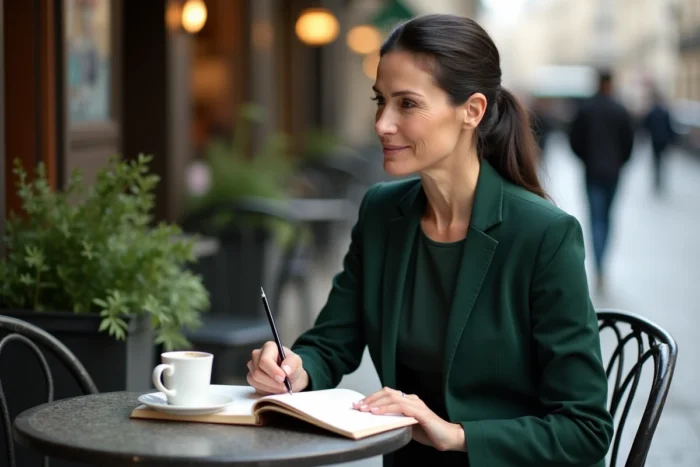
Writing as a guiding thread
Her books are a direct extension of her commitment. The account of her captivity has reached a global readership and remains one of the most consulted sources on the Colombian conflict from the inside. Paris provides a conducive environment for this literary activity, away from the Colombian media pressure.
Private life in Paris: what we know
Ingrid Betancourt maintains a certain discretion about her daily life in Paris. Public information is limited to what she shares during interviews or media appearances. She primarily lives in Paris, a city she describes as a place of stability after the years in the jungle.
Her relationship with France goes beyond mere residency. French nationality, obtained long before her kidnapping, played a crucial role in the international mobilization for her release. French diplomacy was heavily involved in the negotiations, which strengthened her ties to the country.
Contrary to what some quick biographies suggest, Paris is not a default choice but an anchoring built over a lifetime. Childhood, education, family, post-captivity reconstruction: every major step of her journey passes through the French capital. Colombia remains present in her commitments, but it is indeed France that Ingrid Betancourt calls home.