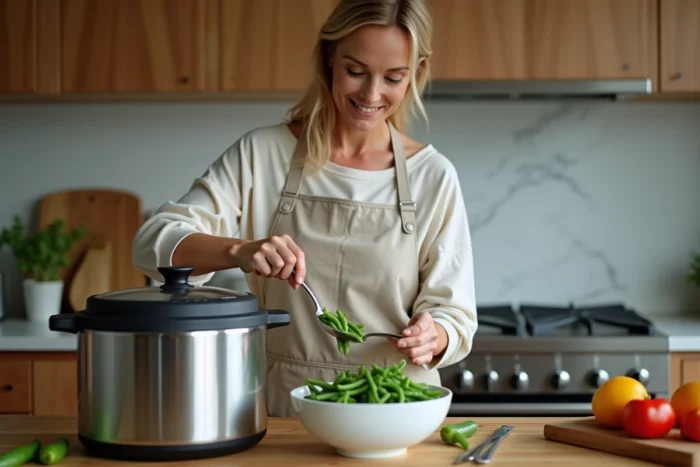
Your green beans came out of the pressure cooker with a beautiful color and just the right texture. The next day, when you reheat them, they end up as a greenish mush at the bottom of the pot. The problem doesn’t lie with the vegetable, but with the reheating method chosen.
The ice bath after the pressure cooker conditions the entire reheating process
Before even talking about reheating, we need to go back to what happens right after cooking under pressure. The pressure cooker brings the green beans to a temperature much higher than that of traditional cooking. When you open the lid, the residual heat continues to cook the fibers of the vegetable.
Dipping the beans immediately into ice water stops this residual cooking. This technique, used in professional kitchens, sets the green color and preserves the crunchiness. Without it, your beans arrive in the refrigerator already overcooked, and reheating will only worsen the damage.
After the ice bath, drain the beans thoroughly. Residual water is an enemy: it softens the fibers during storage. Then place them in an airtight container in the refrigerator. This chain (pressure, ice water, draining, airtight container) is what makes successful reheating possible the next day. If you’re looking to reheat green beans from the pressure cooker, this preparation beforehand makes all the difference.
Reheating green beans in a pan: the method that preserves texture
Have you ever noticed that vegetables reheated in a pan yield better results than those microwaved? The reason is simple: the pan heats by direct contact, quickly, without adding moisture.
The right gesture in three minutes
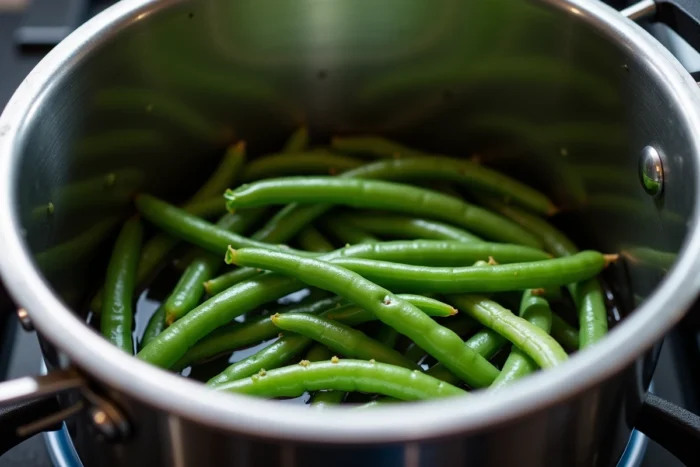
Heat a pan over medium heat with a drizzle of olive oil or a knob of butter. When the fat is hot (not smoking), add the cold green beans in a single layer. Don’t overcrowd them: if they overlap, they will steam instead of reheating.
Gently stir for two to three minutes, no more. The beans should be hot throughout without excessively coloring. A crushed garlic clove or a few sliced shallots added at the beginning of cooking will flavor the dish without complicating it.
This method works particularly well because the initial cooking in the pressure cooker has already softened the fibers. The transition to the pan only raises the temperature, without altering the structure of the bean.
What to avoid in the pan
- Covering the pan with a lid: trapped steam turns reheating into steaming, and the beans become mushy
- Adding water to “prevent sticking”: the result will be soggy beans, exactly what you want to avoid
- Using too high a heat: the beans burn on the surface while remaining cold inside, which leads to extending the heating time
Microwave reheating: possible but with precautions
The microwave is not the enemy of green beans, as long as you don’t use it like an oven. Microwaves heat by agitating the water molecules contained in the food. Green beans, soaked with water after pressure cooking, are particularly sensitive to this.
Spread the beans in a thin layer on a plate, never in a pile in a deep bowl. The thicker the layer, the longer the center will take to heat, and the edges will be overcooked before the middle is warm.
Cover the plate with a microwave-safe film or a dome, leaving an opening for steam to escape. Heat in short intervals: a few tens of seconds, then check. It’s better to do two short passes than one too long.
The result will be acceptable for a quick meal, but the texture will remain below what the pan offers. The microwave tends to make the beans slightly rubbery if you exceed the right duration, even by a little.
Why you shouldn’t put green beans back in the pressure cooker
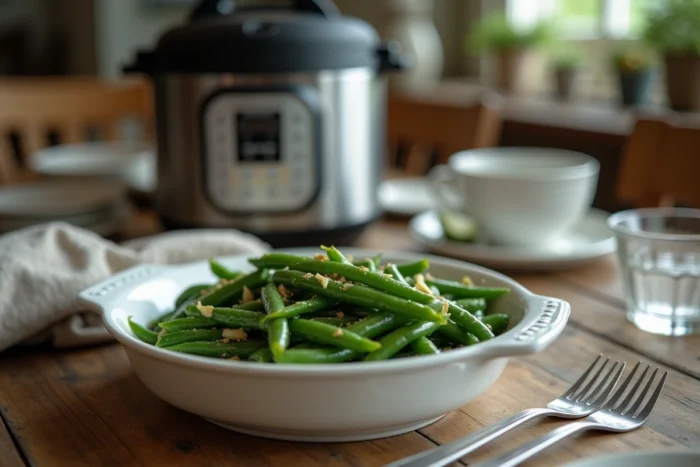
The idea may seem logical: they cooked well in there, why not reheat them in it? Because the pressure cooker doesn’t do things halfway. It quickly builds pressure and temperature, which restarts actual cooking instead of just reheating.
Green beans that have already been cooked under pressure and go back into the pressure cooker lose their firmness in a matter of minutes. They disintegrate, lose their color, and their taste becomes bland. Never reheat green beans in the pressure cooker.
The same reasoning applies to boiling water. Putting cooked beans back into a large volume of hot water saturates them with moisture and dissolves the vitamins that survived the first cooking.
Reheating cooked green beans: only once
A point rarely mentioned but that changes everything: only reheat your green beans once. Each reheating cycle degrades the texture and flavor. If you have a large batch from the pressure cooker, separate it into individual portions before putting it in the refrigerator.
This way, you only reheat the amount needed for one meal, and the rest retains its quality intact for the following days. This habit also avoids repeated handling that promotes bacterial growth.
- Portion immediately after the ice bath, before storing in the refrigerator
- Use shallow airtight containers for quick and even cooling
- Consume reheated portions within two to three days following the initial cooking
The best way to reheat green beans cooked in the pressure cooker remains the pan, over medium heat, for a few minutes. Everything else (the ice bath, draining, airtight storage, portioning) prepares for this moment. A well-treated green bean after cooking withstands reheating very well. Poorly treated, no technique will save it.